Geisel Library: the silhouette and the building beneath it
Understand Geisel Library through William Pereira’s concrete structure, Gunnar Birkerts’ quieter addition and the practical demands of a working campus library.
ExploreGeisel Library: the silhouette and the building beneath it
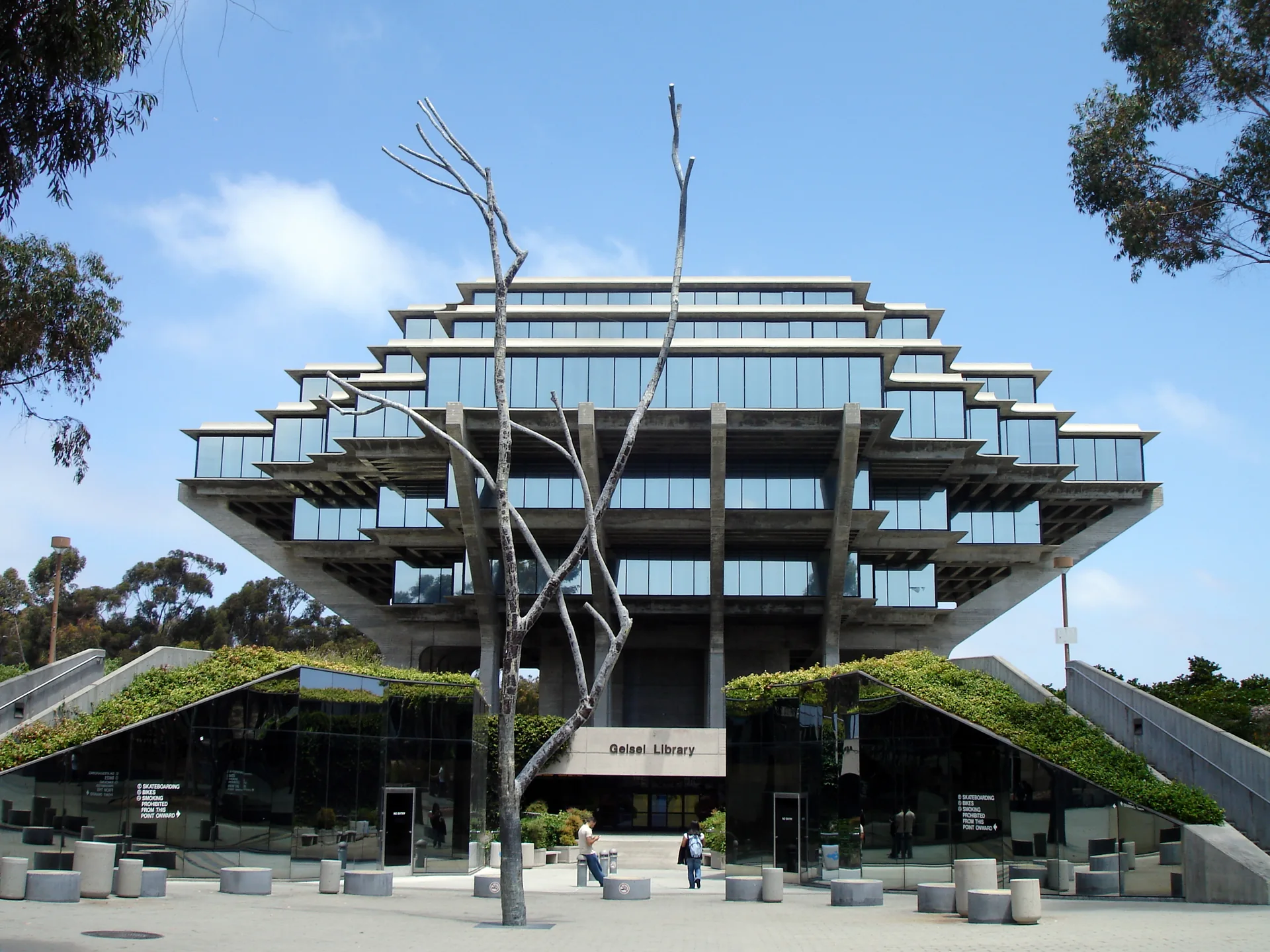
Geisel Library is easy to recognize and harder to reduce to a single architectural idea. UC San Diego’s account of William Pereira’s design places the dramatic exterior alongside a practical ambition: to make books, reading areas and movement work together.[3] The silhouette is an invitation to look more closely, not an explanation on its own. The building becomes more interesting when its image is read alongside the everyday work of a library.
01 
 02
02 
 03
03 
A form shaped by use and cost
The university commissioned William Pereira & Associates in June 1965 to design what was then the Central University Library. UC San Diego’s architecture history explains that Pereira explored a spherical form as a way to accommodate books and readers while keeping different areas accessible.[3] The resulting design can be read as a response to internal relationships, rather than as sculpture placed around a conventional floor plan.
The same history records a consequential material change. An initially proposed steel-framed exterior was reconsidered as costs rose, and Pereira developed a reinforced-concrete scheme that reduced the need for structural steel. Concrete could also remain exposed, avoiding additional finishes required by the earlier approach.[3] That is a useful corrective to the idea that a memorable building arrives fully formed from a single aesthetic decision. Constraints helped shape the architecture.
Look past the outline
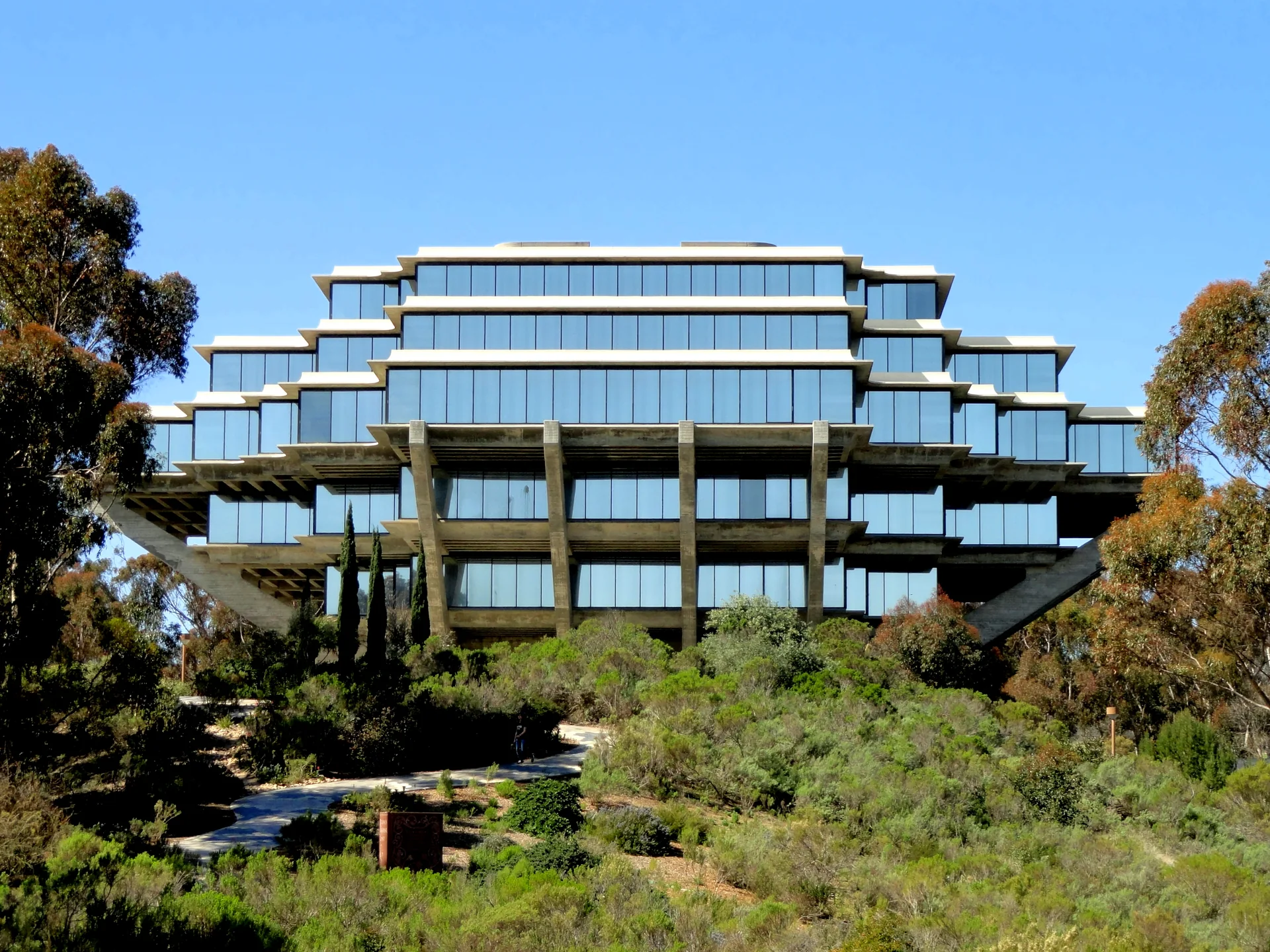
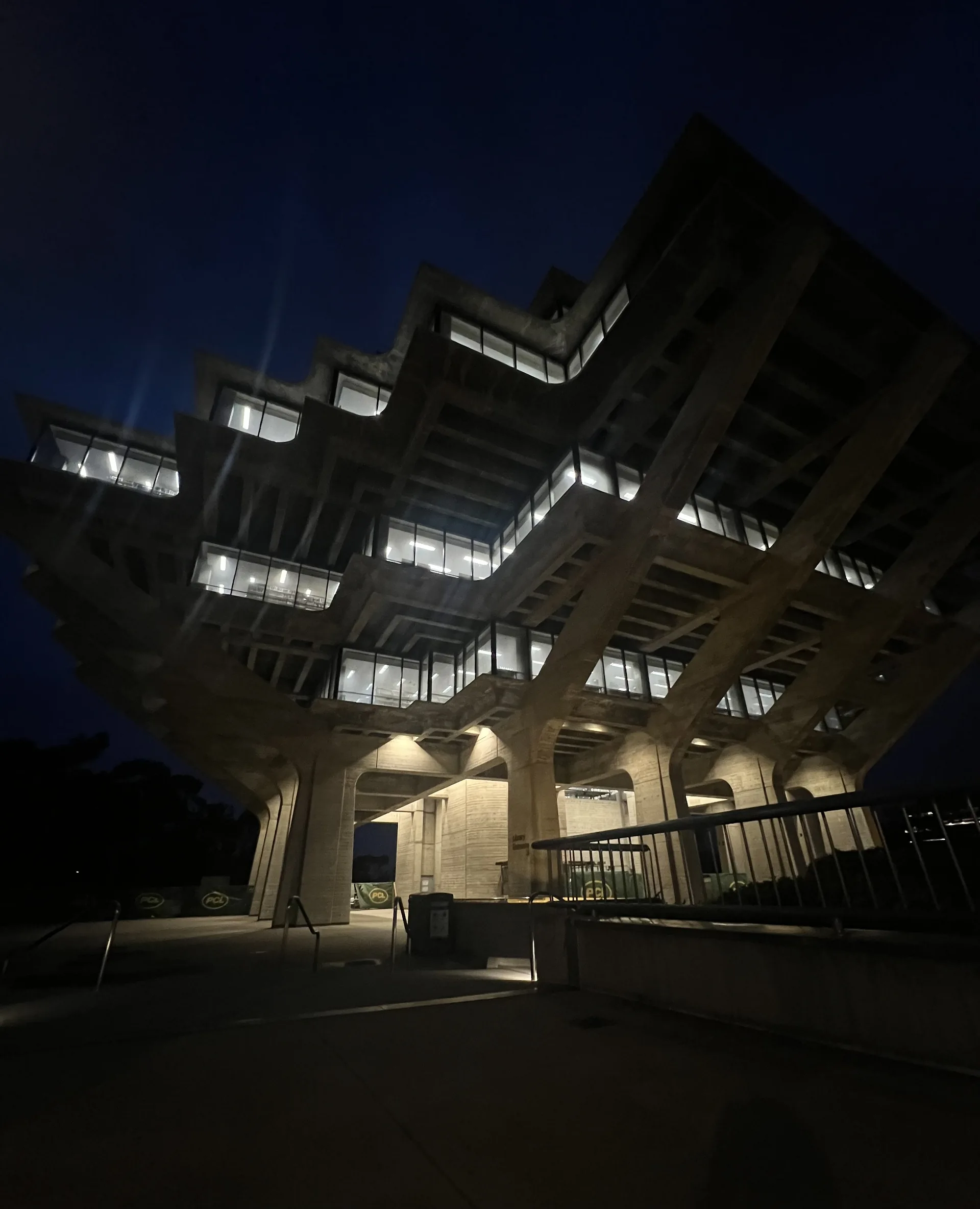
The university’s building guide characterizes Geisel as Brutalist and associates its structure with the idea of hands holding knowledge aloft.[4] That institutional interpretation provides one way to understand the image. It need not be the only way to look. Compare the solidity of the supporting elements with the glazed areas, then consider how the upper volume relates to the ground.
For a library, the questions ultimately return to people: where can someone find a book, read without distraction or ask for help? Pereira’s account, as presented by the university, emphasized accessible stacks, comfortable reading space and reasonable privacy.[3] These priorities are less visible in the distant view, but they explain why the interior cannot be judged solely by its resemblance to the exterior.
An addition that did not compete
UC San Diego’s building guide credits Gunnar Birkerts with the underground space designed on the east and west sides in 1992. It describes an addition intended to remain subordinate to the existing form while bringing natural light to lower levels.[4] This is a second architectural strategy at the same site: expansion without producing another dominant object.
That contrast is worth looking for. One part establishes a recognizable figure; another makes more room while protecting that figure’s role. The useful lesson is not that additions should always be hidden. It is that the placement of new space can be a deliberate response to the identity of what is already there.
Remember who the building serves
The library’s guide welcomes exploration of floors one and two while identifying tower floors four through eight as quiet-study areas.[4] Consult current university guidance before a visit and avoid treating study space as a photo set. The guide also identifies art around the building, including Alexis Smith’s Snake Path and John Baldessari’s entrance installation.[4] Architecture and art offer plenty to consider without interrupting readers. The most meaningful measure of this landmark is not just how well it photographs, but how its strong form continues to accommodate the less conspicuous work inside.
Sources & further reading
Sources checked for this story. Access conditions and project details can change; consult the responsible organization before visiting.
Photographic index
A closer look. Select a photograph to open the full image.
Related stories
At the Salk Institute, the space between buildings does the work
Explore Louis Kahn’s Salk Institute through its courtyard, adaptable laboratories and carefully handled materials, with official guidance for planning a visit.
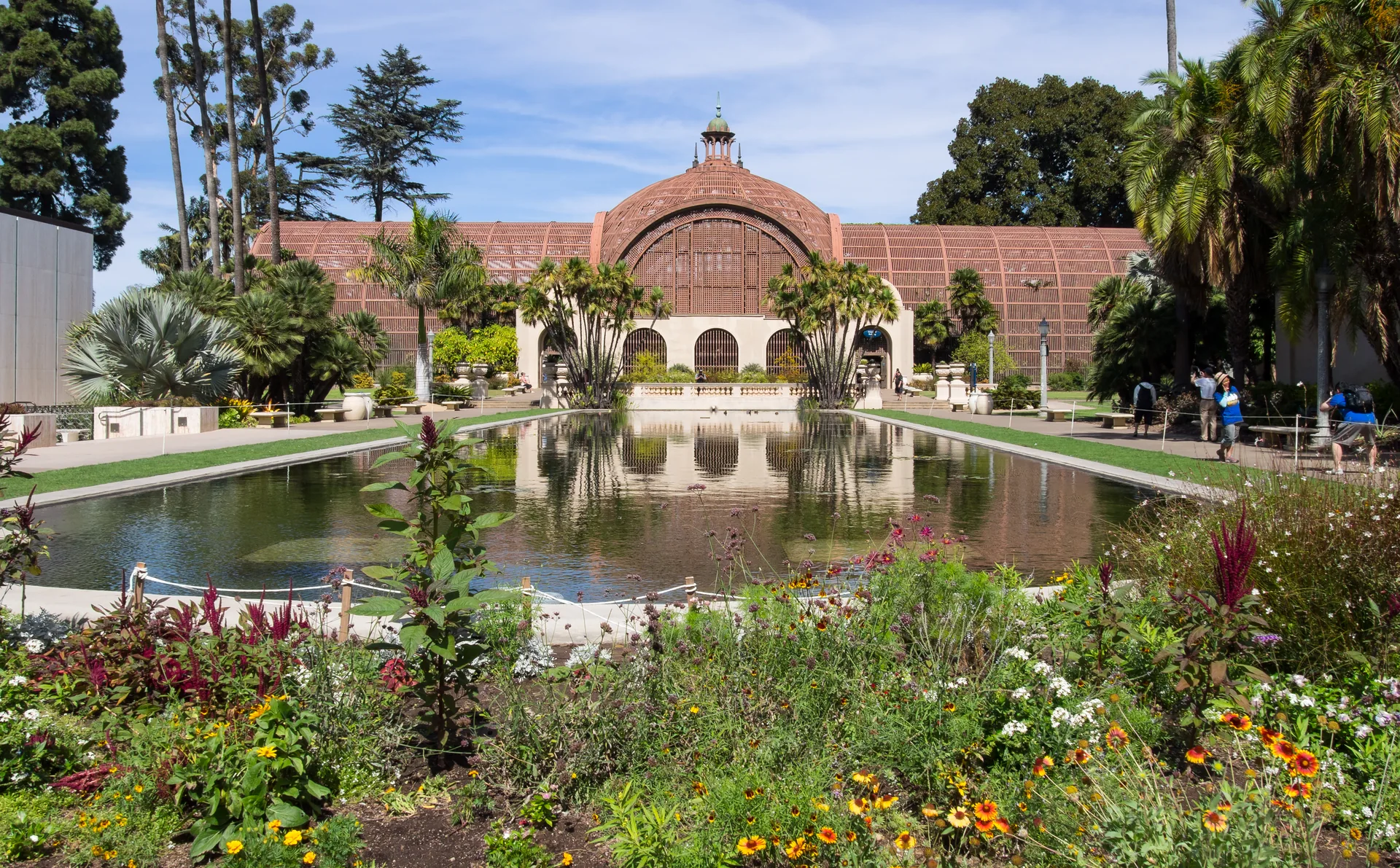
The Botanical Building: architecture that lets the garden lead
Read Balboa Park’s Botanical Building through its redwood lath, restored arcades and living collection, with a practical guide to looking beyond the postcard.