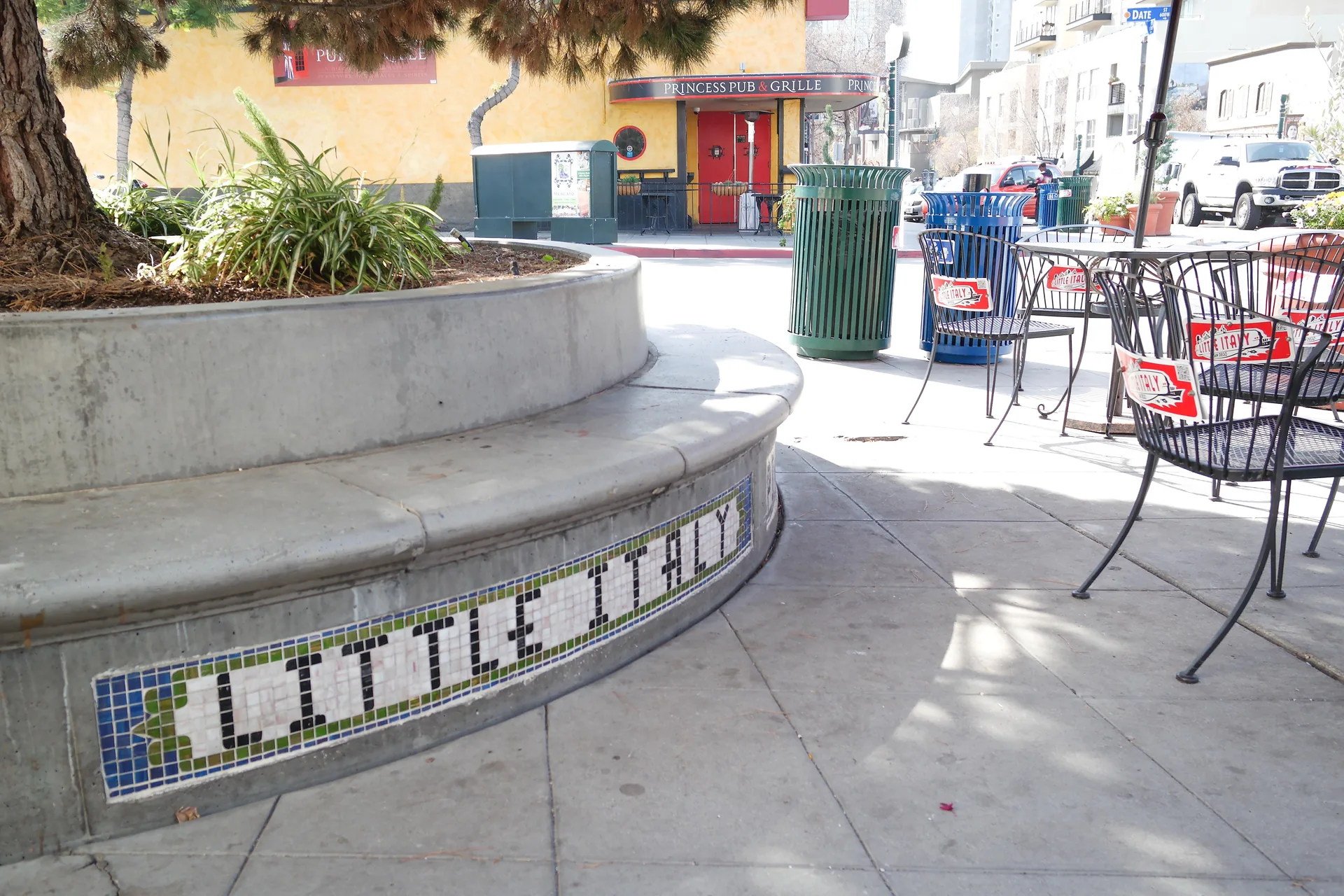
Little Italy’s public rooms: a piazza is more than paving
Read Little Italy through Piazza della Famiglia and Amici Park: seating, active edges and different kinds of shared space, beyond the restaurant itinerary.
ExploreLittle Italy’s public rooms: a piazza is more than paving
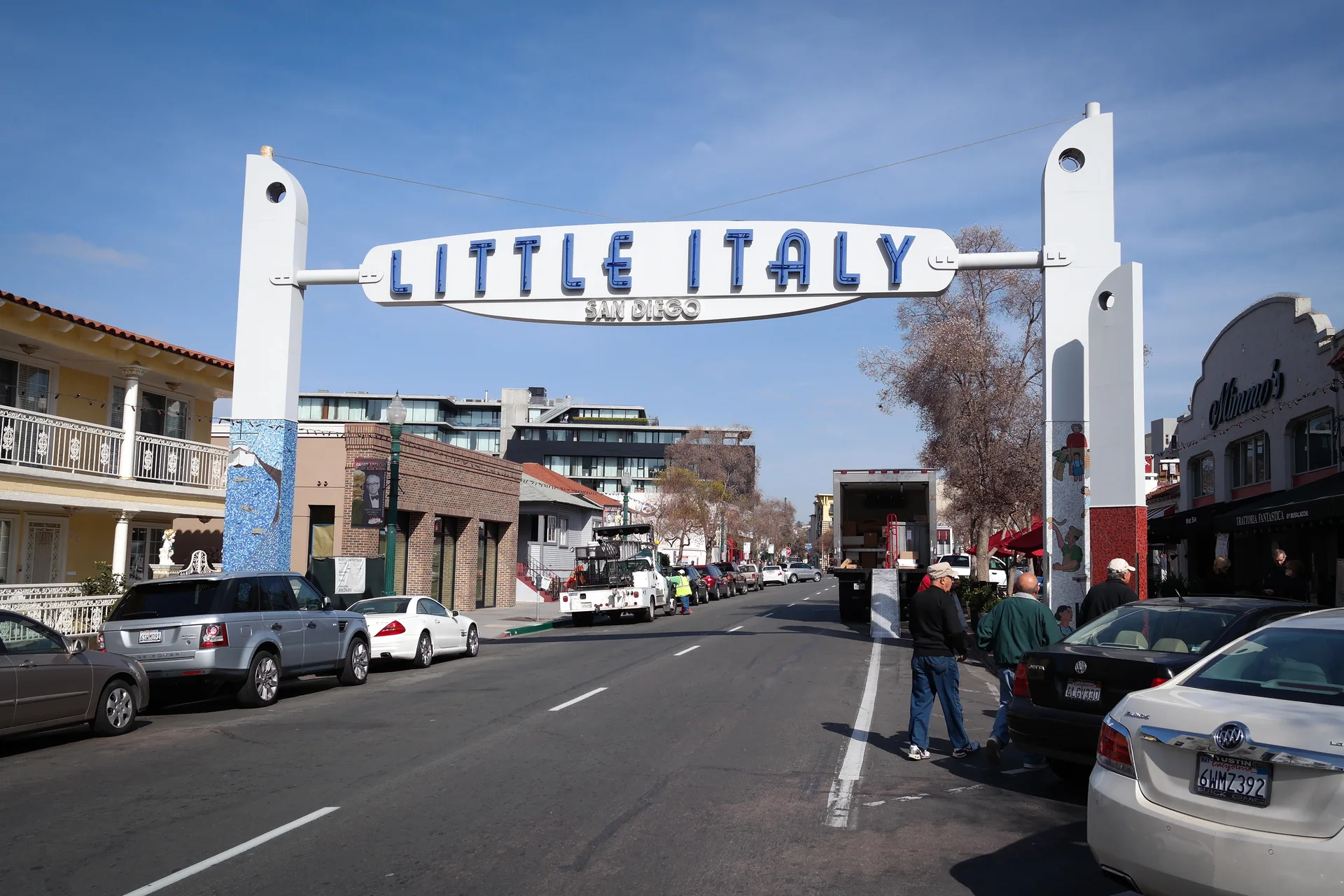
A neighborhood guide can become a list of places to buy something. Little Italy supports a different reading: look at the spaces between destinations and ask what kinds of everyday activity they make possible. Piazza della Famiglia and Amici Park are useful examples because their own neighborhood association describes distinct mixes of gathering, recreation and surrounding uses.[17][18] Comparing them is more instructive than declaring a single formula for a successful public space.
01 
 02
02 
 03
03 .jpg)
A street made into a gathering place
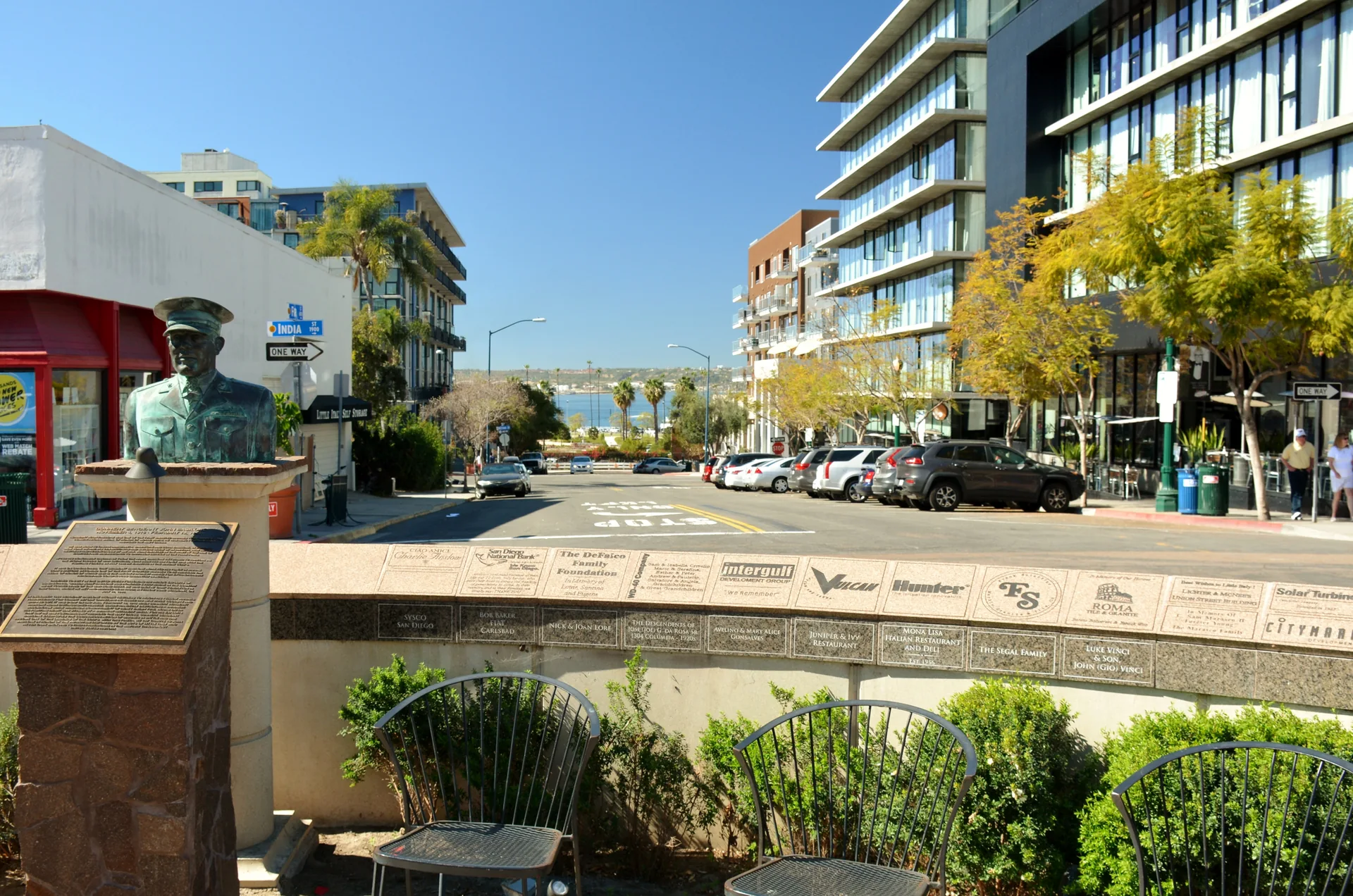
The Little Italy Association identifies Piazza della Famiglia as a 10,000-square-foot space on West Date Street between India and Columbia streets, opened in March 2018. Its description includes a tiled fountain, tables, chairs and umbrellas.[17] These details matter because a place to pass through and a place to remain are not quite the same design problem.
When looking at a plaza, start with the ordinary decisions: where could someone sit, how does a walking route continue, and which edges invite a pause? Furniture and shade can be as important to that reading as a central feature. This is an invitation to observe the space, not a promise that a particular seat will be available or that an event will leave every route unchanged.
The association describes the piazza as part of an H.G. Fenton Company development combining residences with ground-level retail and restaurants.[17] That context is important. The space is not detached from the buildings around it. A useful architectural question is how their entrances and uses contribute to the edges, and how public passage relates to the activity of individual businesses.
Public life needs more than one kind of room
Amici Park broadens the comparison. The association identifies a dog park, amphitheater and bocce courts, and credits collaboration with the San Diego Unified School District in creating the multi-use space.[18] This is a different collection of activities from a restaurant-lined piazza. It puts recreation and shared facilities into the conversation about neighborhood life.
Different users need different things from a public place. A game requires a defined playing area; a gathering needs somewhere to face or sit; a person walking through needs a legible path. The point is not that every plaza should contain every activity. It is that a neighborhood can offer a range of spaces rather than asking one picturesque square to carry all its social life.
Read the operating layer
The association publishes event and rental information for these spaces.[17][18] That is a reminder that public-space design includes management as well as physical form. An empty plan drawing cannot explain when an area is programmed, how access is organized or what rules apply. Check the official pages when planning around an event instead of relying on a permanent schedule in a travel article.
On an architecture-minded visit, compare the piazza’s edges with the park’s distinct activity areas. Notice seating, circulation and the relationship between people stopping and people moving. Those observations produce a richer account than a ranking of photogenic corners. Little Italy’s public realm is worth considering as neighborhood infrastructure: not simply an attractive setting for a meal, but a set of spaces with different jobs to do.
Sources & further reading
Sources checked for this story. Access conditions and project details can change; consult the responsible organization before visiting.
Photographic index
A closer look. Select a photograph to open the full image.
Related stories
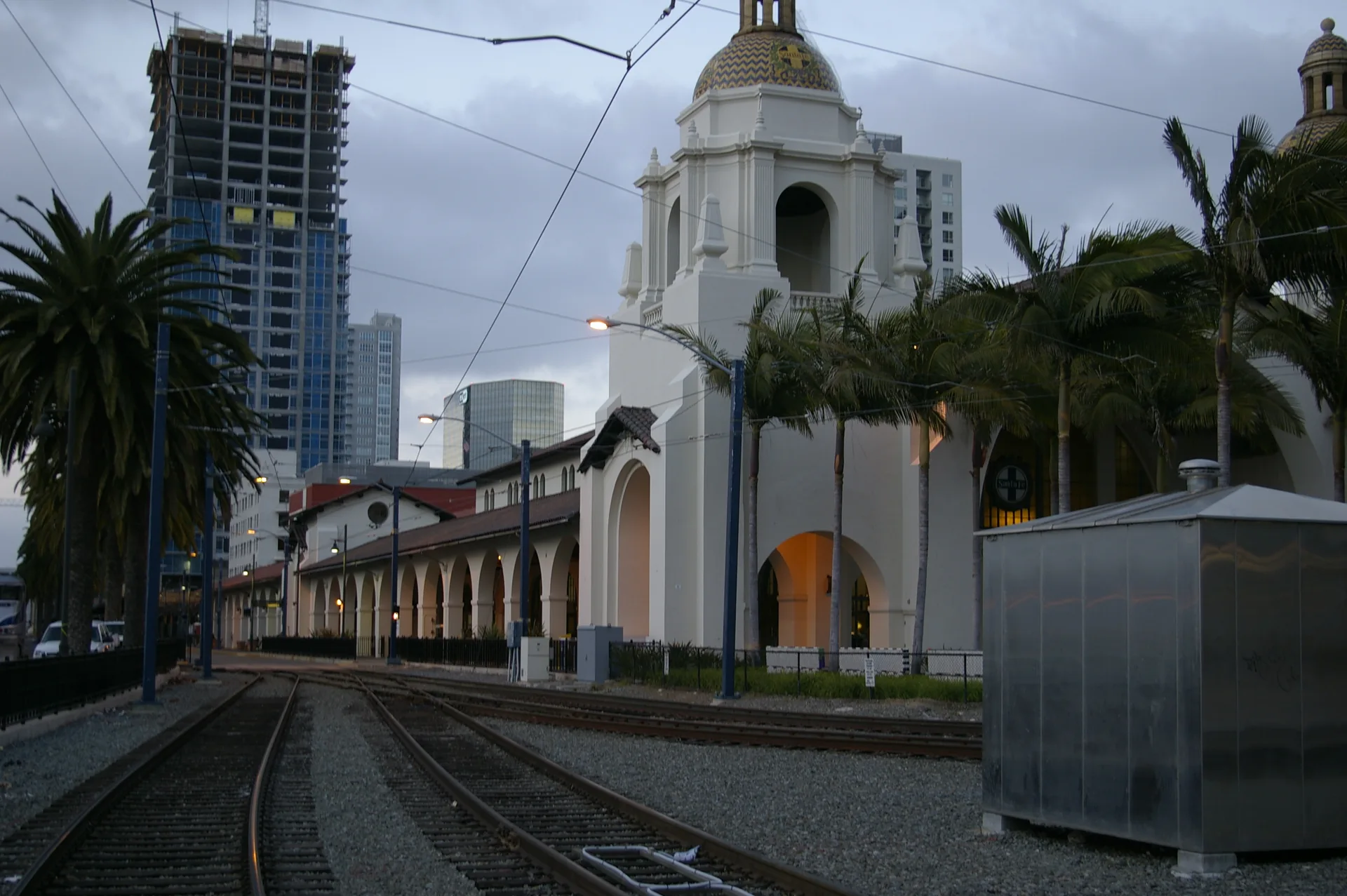
Santa Fe Depot: a civic room built around arrival
Look beyond Santa Fe Depot’s tiled towers to its arcades, waiting room and railway history, then plan a downtown visit using the operator’s station information.
Bankers Hill and Balboa Park: reading the neighborhood at its edge
Explore Bankers Hill’s relationship with Balboa Park through its streets, canyons and varied buildings, with a clearly disclosed connection to Broderick.