The Botanical Building: architecture that lets the garden lead
Read Balboa Park’s Botanical Building through its redwood lath, restored arcades and living collection, with a practical guide to looking beyond the postcard.
ExploreThe Botanical Building: architecture that lets the garden lead
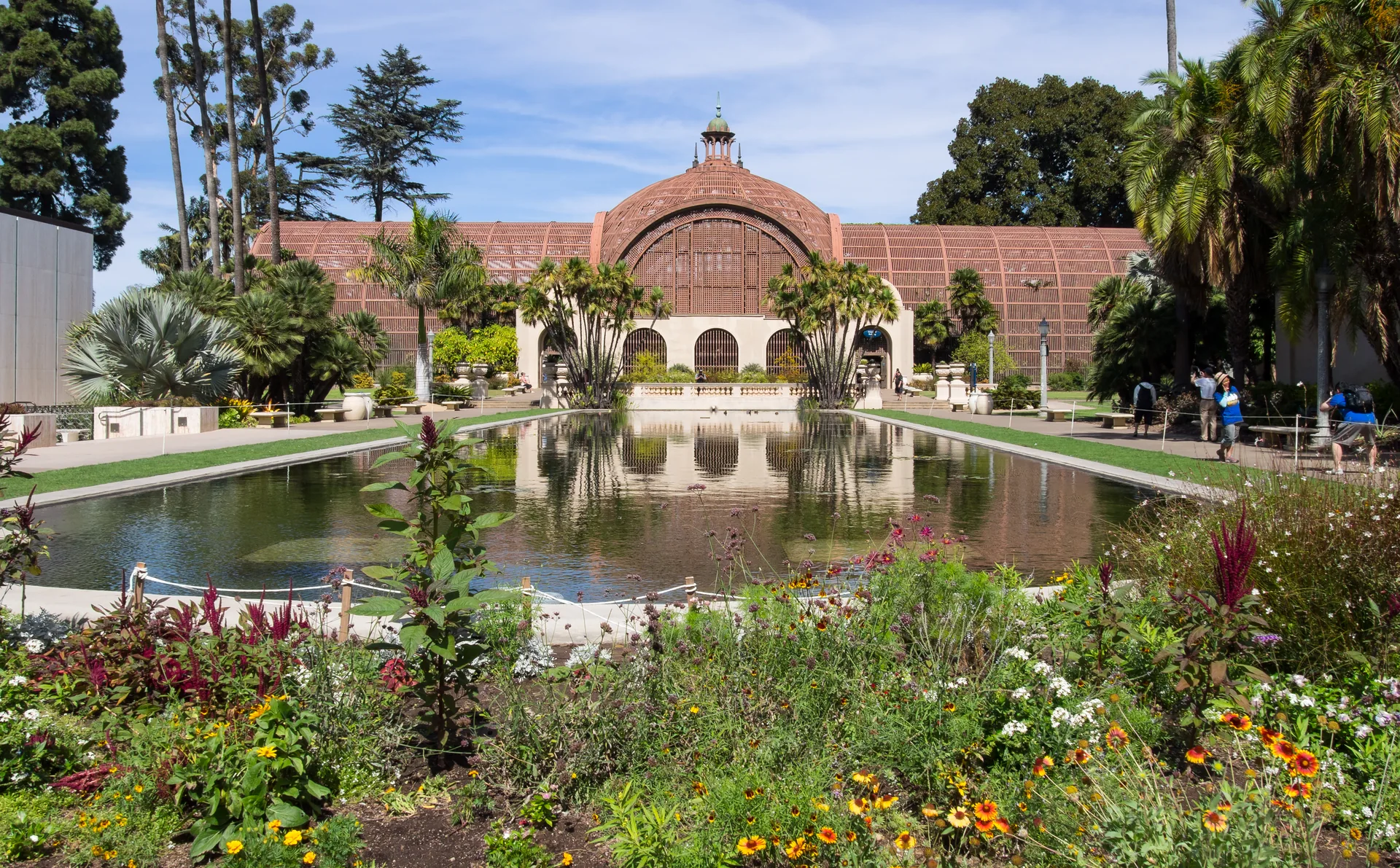
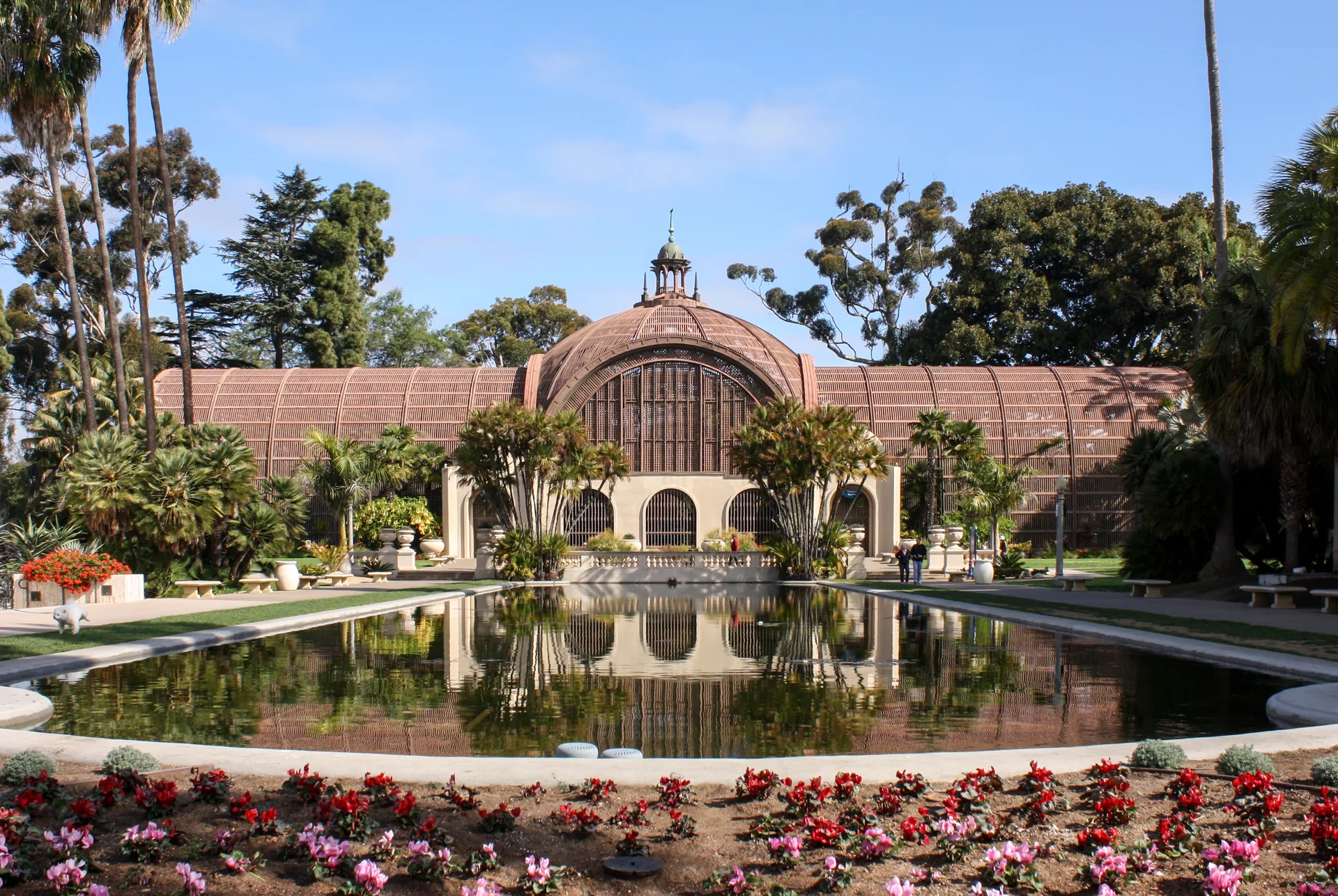
A garden building does not have to disappear to put plants first. Balboa Park’s Botanical Building makes its enclosure conspicuous: an arched envelope assembled from narrow strips of wood. The City identifies those strips as lath and describes their role in the roof and central rotunda.[11] That combination of a recognizable outline and a finely divided surface is a useful starting point for looking at the building as architecture, rather than only as a backdrop.
01 
 02
02 
 03
03 
A permanent idea from an exposition
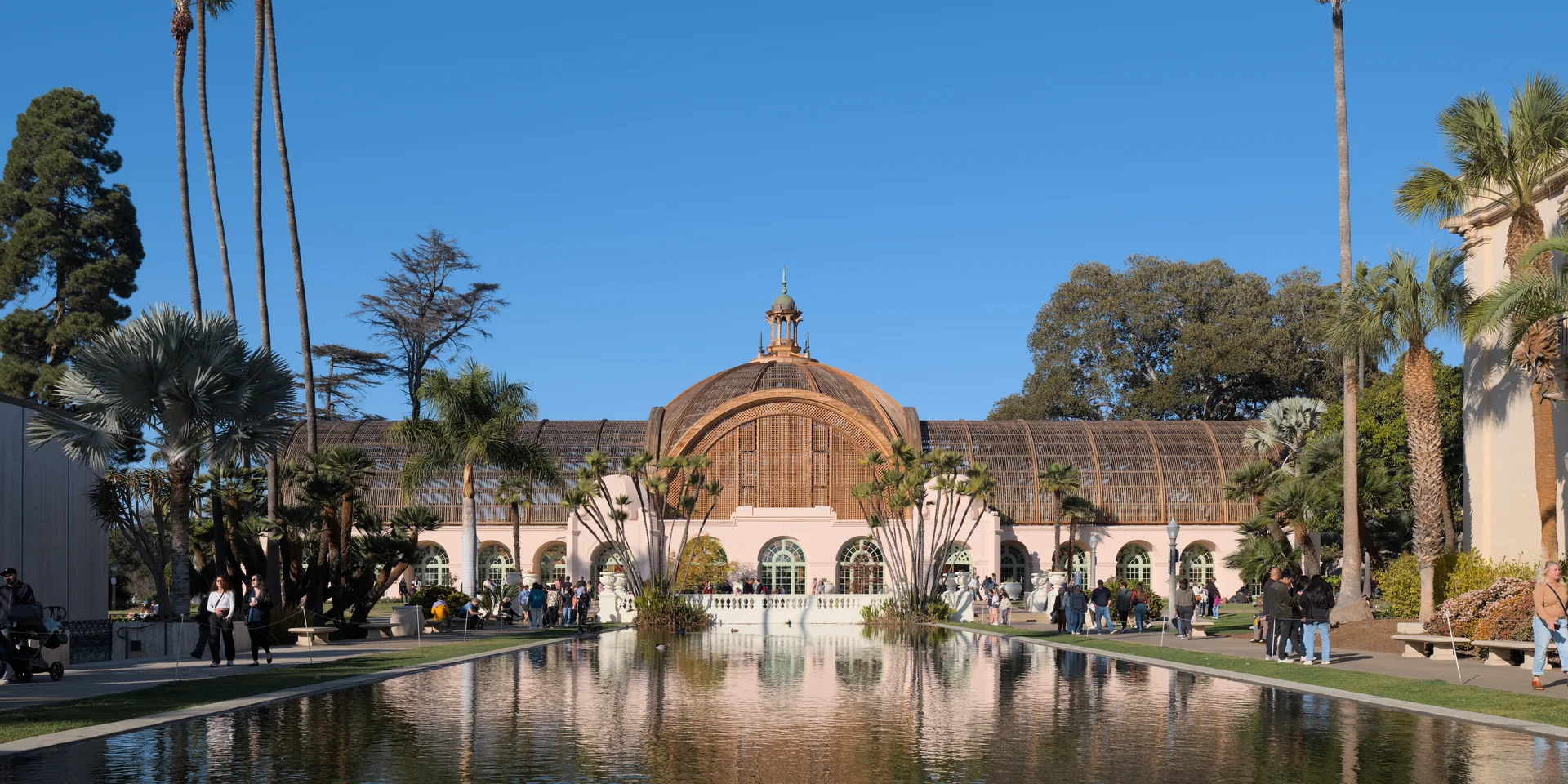
The Botanical Building and its adjacent Lily Pond were built for the 1915 exposition; the City’s history identifies them among the features intended to remain after the fair.[11] The park’s visitor guide places the building beside the El Prado walkway, adjacent to the Timken Museum of Art.[12] Its location makes it possible to consider the building in relation to a public route and an outdoor foreground, not as an isolated object.
Try reading that composition in three parts: the approach along the pond, the outline of the building, and the closely spaced material that makes the outline. These are different scales of attention. A distant photograph emphasizes the overall form; a closer look asks how the enclosure is put together. Neither replaces the experience of looking at the plants themselves.
 04
04 
What the restoration actually changed
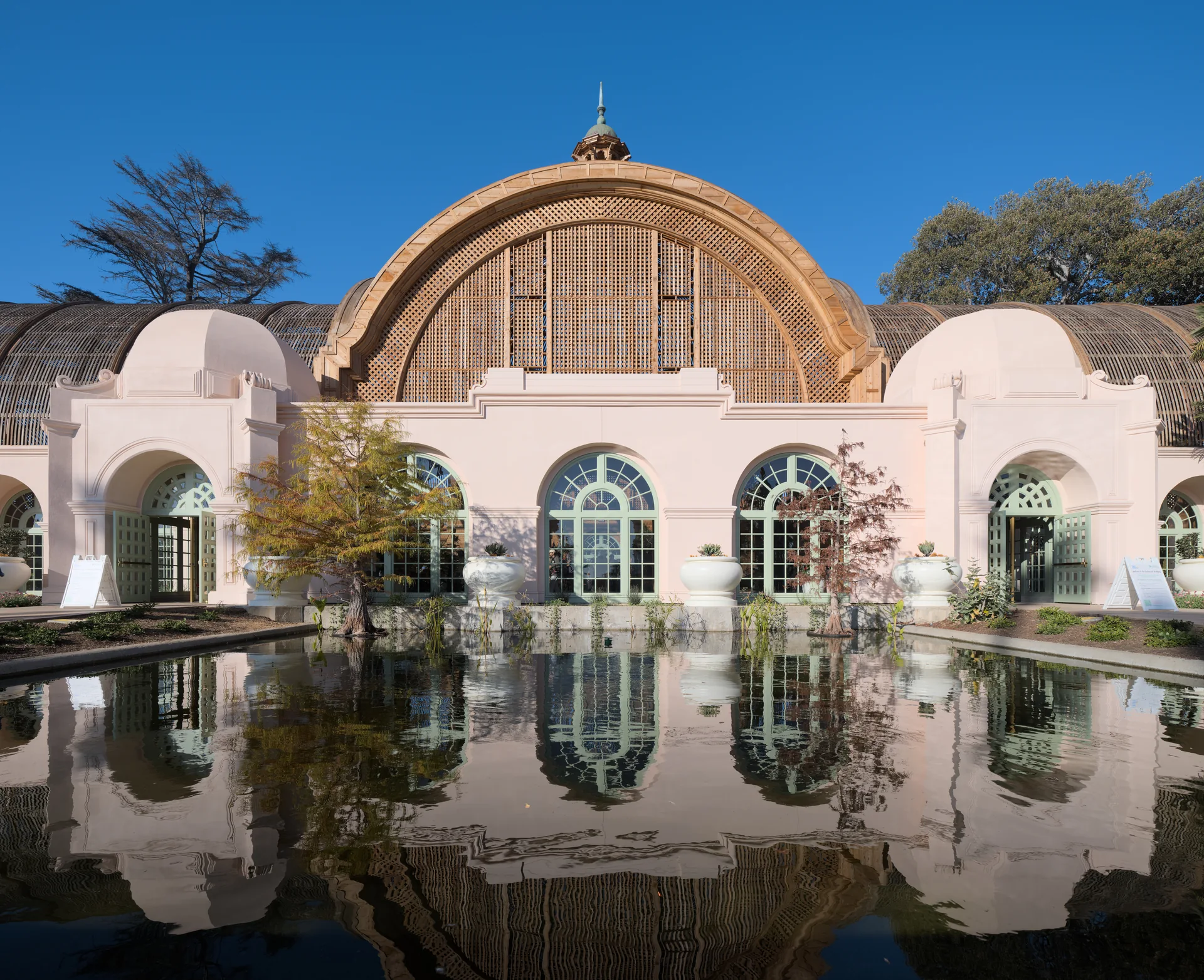
The City announced the building’s reopening on December 6, 2024. Its account of the first phase lists structural work, replacement of redwood lath, reconstruction of historic window arcades, planter upgrades and accessibility improvements.[11] Those are more informative details than a general claim that the landmark was simply refreshed. They describe work on the structure, the recognizable exterior and the experience of moving through a living collection.
Restoration here is worth understanding as a set of decisions about use as well as appearance. A rebuilt arcade can recover a historic relationship between openings and enclosure. A planter or accessibility improvement can address how people encounter the garden. This is an architectural reading of the documented scope, not a claim that every later landscape project is complete. The 2024 announcement also discussed a separate second phase; its future-tense description should not be mistaken for a present-day construction update.[11]
Look at the collection, not only the shell
The park’s guide identifies cycads, ferns, orchids, palms and other tropical plants among the collection.[12] Rather than treating that list as a checklist to rush through, choose a few contrasting forms. Compare a broad leaf with a fine frond, or the outline of a plant with the repeated lines of the enclosure. That is a simple way to notice what the architecture frames without needing specialist botanical knowledge.
For a visit, use the park’s official listing for building hours and the park FAQ for access information; the grounds and individual attractions do not all share one schedule.[12][13] Leave time for the pond-side approach as well as the interior. The design lesson is not a style to copy. It is the way a clearly expressed structure can give a collection an address while leaving the plants as the reason to enter.
Sources & further reading
- [11] City of San Diego: Botanical Building reopening (December 6, 2024)
- [12] Botanical Building and Lily Pond | Balboa Park
- [13] Balboa Park FAQs | Hours, Parking, Museums & Visitor Info
Sources checked for this story. Access conditions and project details can change; consult the responsible organization before visiting.
Photographic index
A closer look. Select a photograph to open the full image.
Related stories
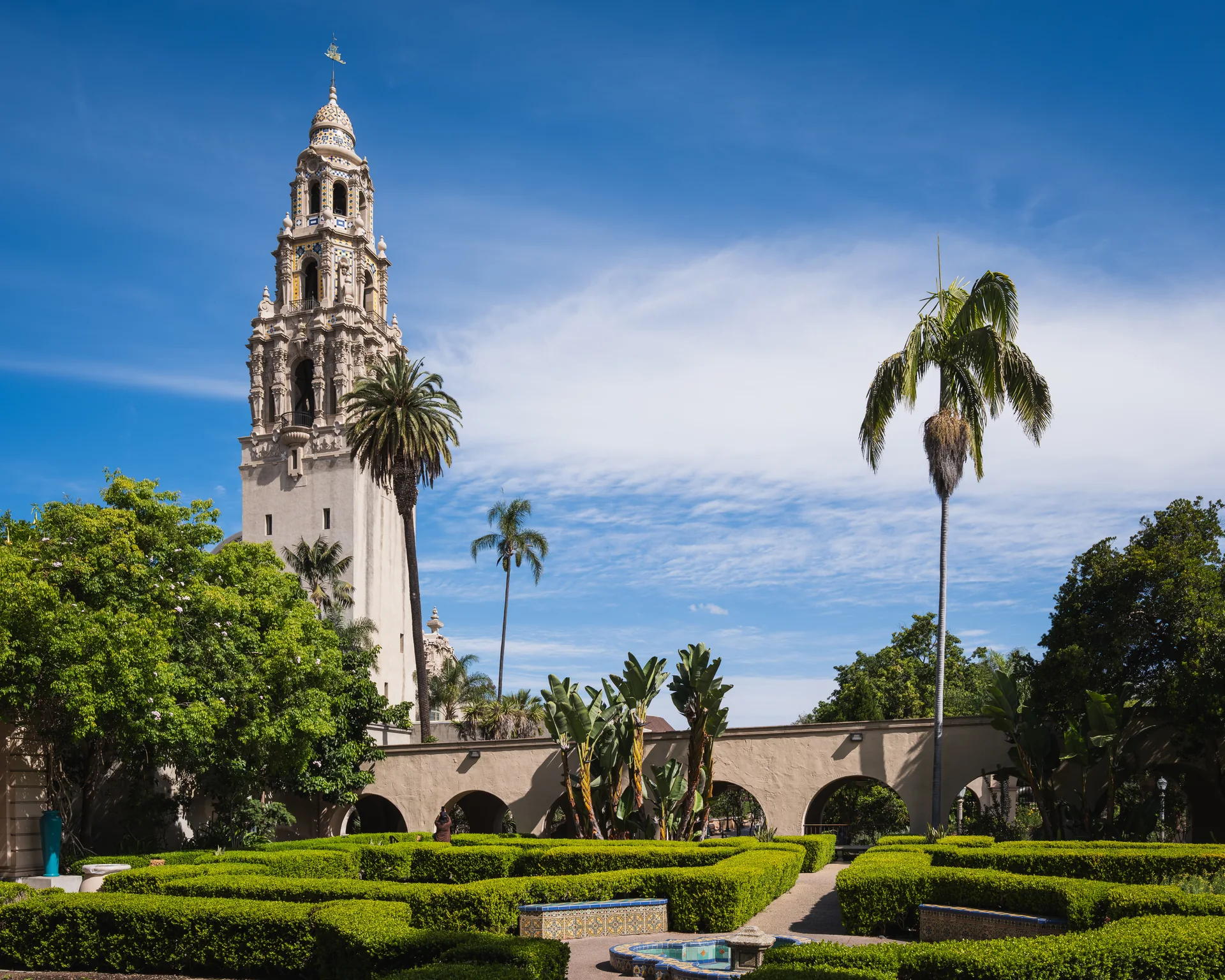
Bankers Hill and Balboa Park: reading the neighborhood at its edge
Explore Bankers Hill’s relationship with Balboa Park through its streets, canyons and varied buildings, with a clearly disclosed connection to Broderick.
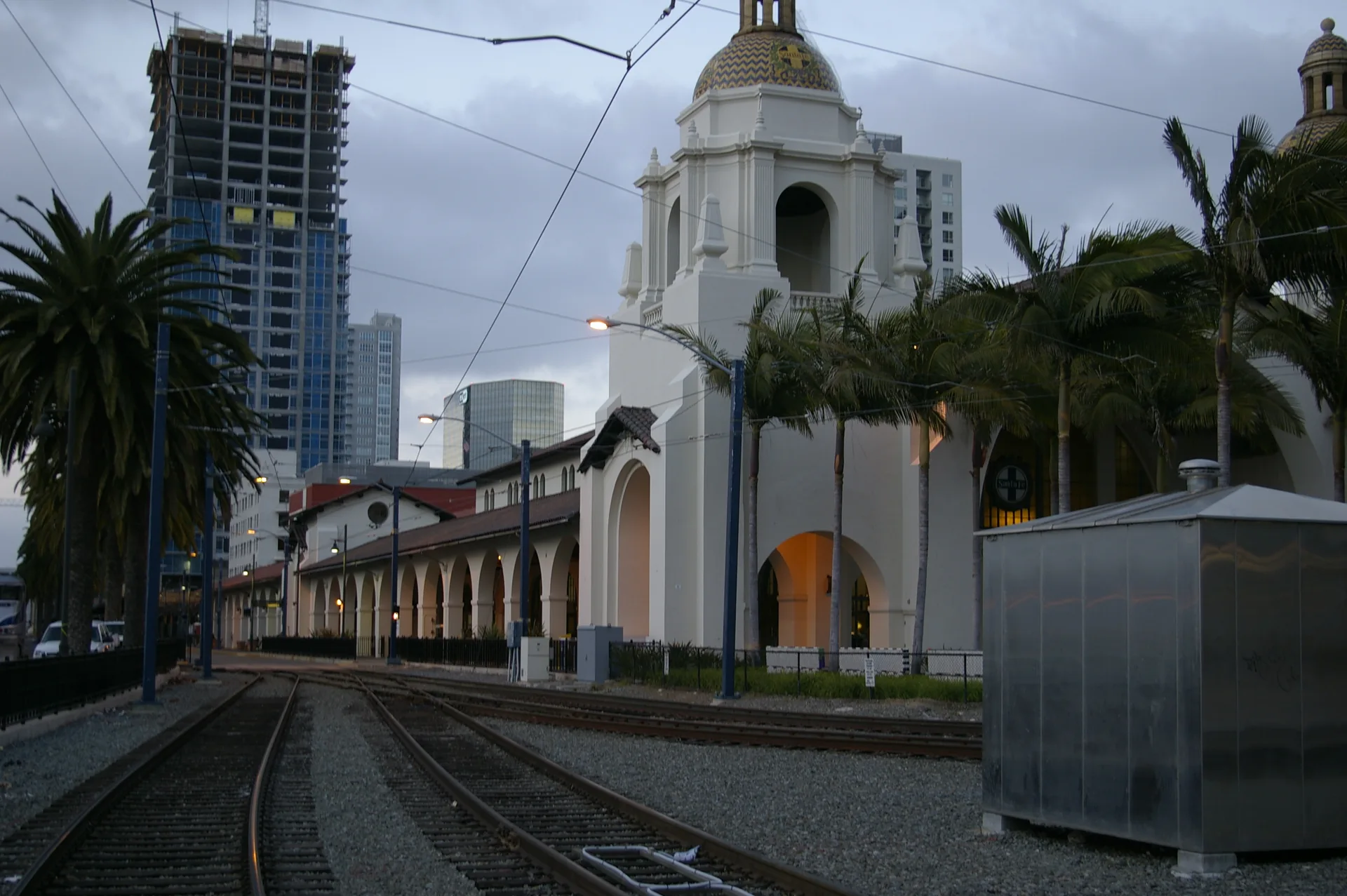
Santa Fe Depot: a civic room built around arrival
Look beyond Santa Fe Depot’s tiled towers to its arcades, waiting room and railway history, then plan a downtown visit using the operator’s station information.